The Buyer's Guide
Choosing a Spray Foam Rig: Trailer vs. Truck-Mount
The real tradeoffs between a trailer rig and a truck-mounted rig — mobility, cost, maintenance access, and resale — for a new or growing spray foam operation.
Every new spray foam operation eventually asks the same question: trailer or truck-mount. Both are real, common configurations used across the industry, and neither is universally correct — the right choice depends on your service radius, the jobs you're targeting, and how much you can put down up front.
What a Trailer Rig Actually Gives You
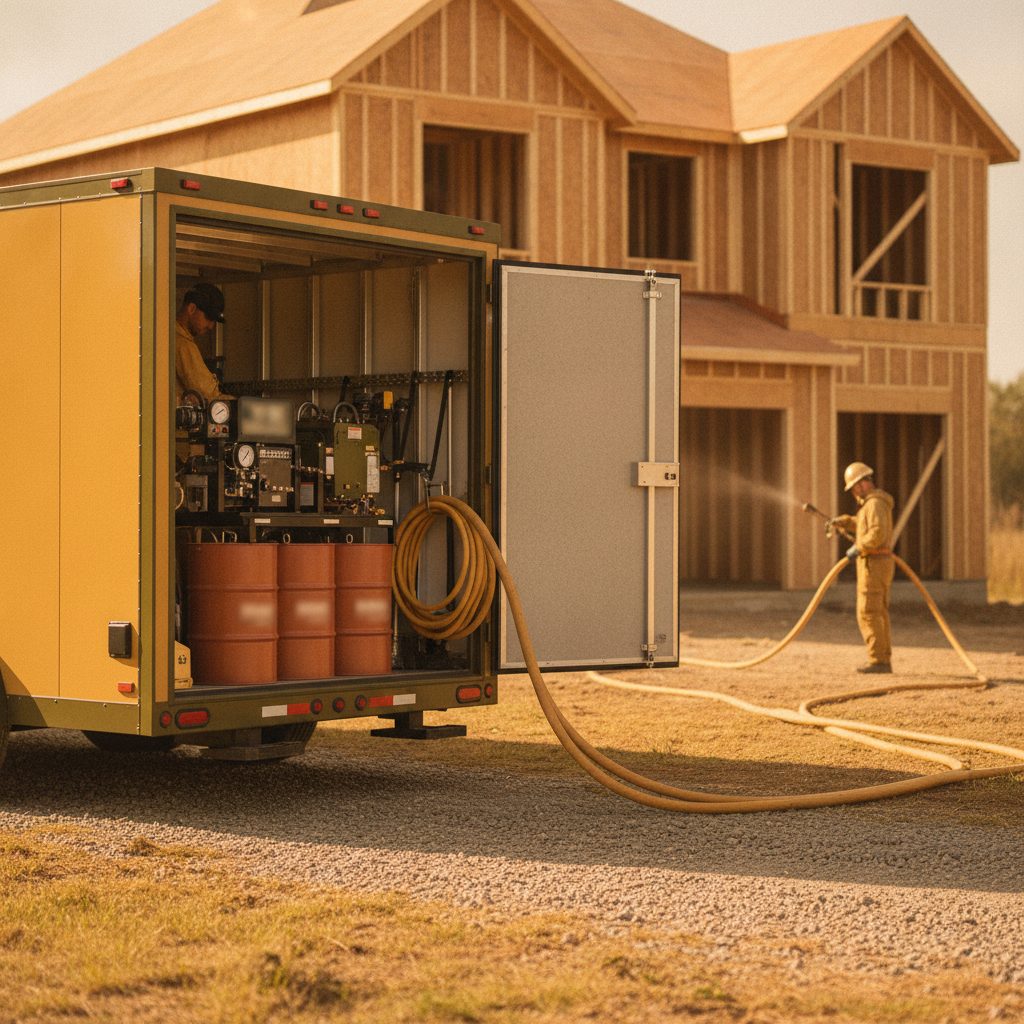
An enclosed trailer rig houses the proportioner, drums, generator, and hose reels inside a dedicated enclosed trailer that hitches to any suitable tow vehicle. The core advantage is flexibility on the tow vehicle side — you can use a truck you already own, and if that truck needs replacing, the rig itself doesn't have to move. Trailers also tend to be easier to resell as a standalone unit, since the buyer isn't also inheriting your specific truck.
The tradeoff is towing logistics: parking, backing up on tight residential job sites, and the added length can be a real daily friction, especially for crews working in dense suburban neighborhoods or multi-unit developments with limited maneuvering room.
What a Truck-Mounted Rig Actually Gives You
A truck-mounted rig integrates the equipment directly into a box truck or flatbed, eliminating the towing/backing-up problem entirely — you drive one vehicle, park it, and you're set up. This tends to be the preferred configuration for crews doing a high volume of small residential jobs in tight urban or suburban settings where trailer maneuvering costs real time every single day.
The tradeoff is that the equipment and the vehicle are now one asset — if the truck needs major mechanical work or eventually needs replacing, the equipment transition is more involved than simply re-hitching a trailer to a different tow vehicle. Resale is also more constrained, since you're selling a specific truck-plus-equipment package rather than two separable assets.
Service Radius Changes the Right Answer
An operation doing mostly local, short-radius residential work often leans truck-mount for the daily convenience. An operation covering a wide multi-county or multi-state radius, doing larger commercial jobs, or running multiple crews off a shared equipment pool tends to lean trailer, since a trailer can be dropped at a job site and the tow vehicle freed up for other use, and a spare trailer is a cheaper way to add capacity than a second full truck-mounted unit.
New vs. Used, Either Configuration
Both trailer and truck-mount rigs show up regularly on the used equipment market, and a well-maintained used rig with a documented service history and legitimate hour count on the proportioner can be a genuinely reasonable way to enter the trade at lower upfront cost than new. The real risk with used equipment isn't the age of the trailer or truck body — it's the condition and calibration history of the proportioner itself, which is the expensive core of either configuration and the harder thing to properly inspect before buying.
Key Takeaways
- Trailer rigs offer tow-vehicle flexibility and easier resale as a standalone asset; truck-mounted rigs eliminate towing/backing-up friction on tight job sites.
- A high volume of small, local residential jobs tends to favor truck-mount; wide service radius or multi-crew commercial operations tend to favor trailers.
- Neither configuration is more "professional" than the other — both are standard, common setups across the industry.
- For used equipment, the proportioner's condition and calibration history matters far more to inspect carefully than the trailer or truck body's age.
Common Questions
Rig: Trailer vs. Truck-Mount FAQs
Real questions people ask before buying equipment or starting out.
Related Topics
Spray Foam Proportioner Buying Guide
What actually separates proportioner classes and price tiers — ratio-control precision, output rate, and serviceability — before you commit to equipment.
Read moreWhat It Actually Costs to Start a Spray Foam Business
A realistic, itemized look at rig cost, chemical costs, PPE, training, and working capital — the numbers most "how to start" content skips.
Read moreSpray Foam Chemical Suppliers: What to Know Before You Buy
How the major manufacturer/distributor landscape actually works — direct vs. distributor purchasing, minimum orders, and what changes as you scale.
Read more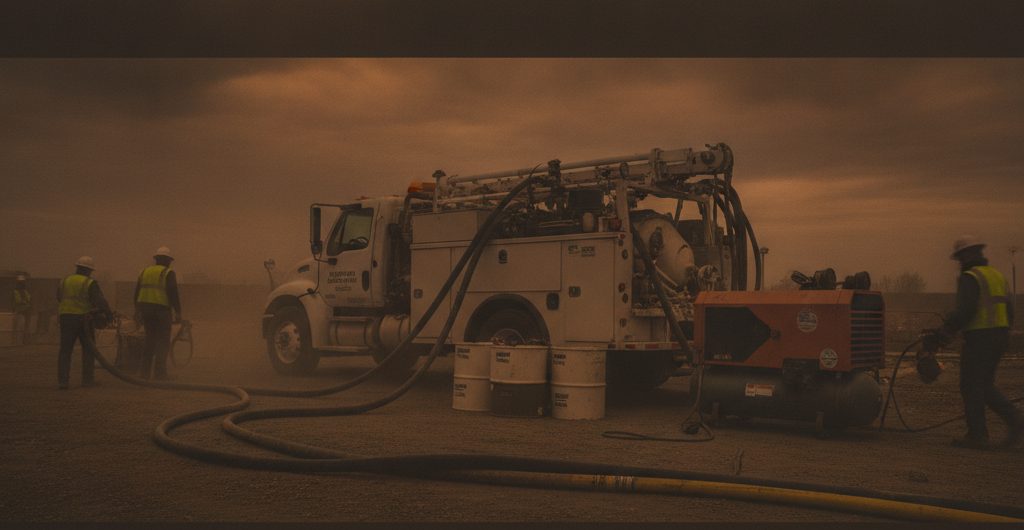
Ready to Talk Through Your Plans?
Whether you're just exploring or ready to buy a rig, talk to Contractors Choice Agency — free, no obligation, and grounded in real contractor experience.