The Buyer's Guide
PPE & Safety Equipment Every Spray Foam Rig Needs
The actual respiratory protection, supplied-air, and safety equipment list for isocyanate exposure — not a generic construction-PPE checklist.
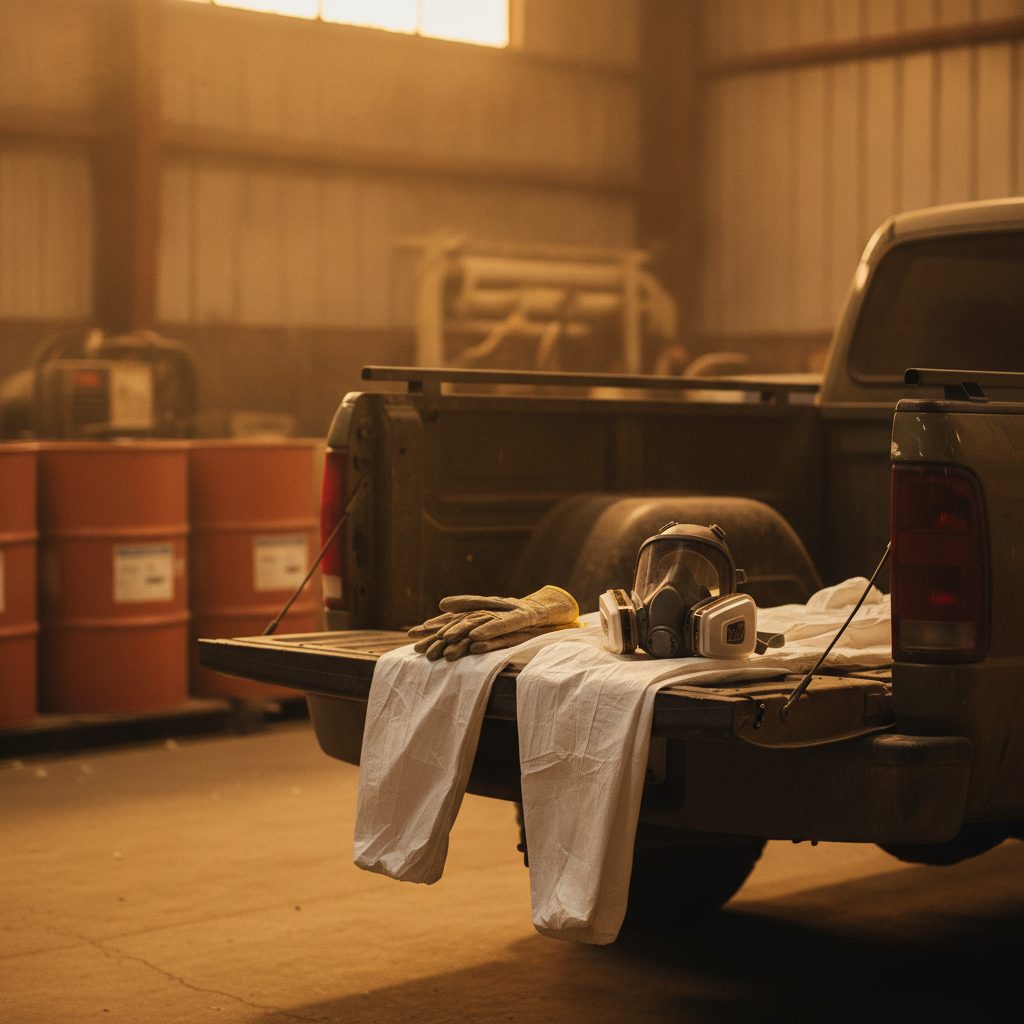
Spray foam PPE isn't generic construction safety gear — the primary hazard is airborne isocyanate exposure (almost always MDI) during and shortly after application, which calls for specific respiratory protection, not a standard dust mask or generic half-face respirator rated for other trades.
Respiratory Protection Is the Core Requirement, and It's Application-Specific
The correct respiratory protection level depends on the specific application — an open, well-ventilated space allows different protection than a confined attic or crawlspace. Options range from a properly fitted, isocyanate-rated air-purifying respirator with the correct cartridges for open applications, up to supplied-air respirator systems for confined or poorly ventilated spaces where air-purifying protection isn't sufficient. Choosing the wrong protection level for the specific job — not just wearing "a respirator" — is the real safety requirement.
Fit Testing Isn't Optional
A respirator that isn't properly fit-tested to the individual wearer doesn't provide its rated protection level, regardless of how good the equipment itself is. Facial hair, an improperly sized mask, or a damaged seal all compromise protection in ways that are easy to overlook and genuinely dangerous given the specific hazard involved. Fit testing is a real, recurring requirement, not a one-time equipment purchase.
Coveralls, Gloves, and Eye Protection Round Out the Core Kit
Beyond respiratory protection, disposable or reusable coveralls appropriate for chemical exposure, chemical-resistant gloves, and eye protection are standard for anyone in or near the active spray zone. These are lower-cost items relative to respiratory equipment, but skipping them creates real skin and eye exposure risk that a respirator alone doesn't address.
Ventilation and Re-Entry Timing Are Part of the Safety Equipment Conversation
Adequate ventilation equipment (fans, exhaust setups appropriate to the space) and a clear understanding of manufacturer-specified re-entry timing after application are part of a complete safety plan, not separate from PPE. Correctly used PPE during application doesn't eliminate the need to manage air quality and re-entry timing for anyone entering the space afterward, including the homeowner.
Budgeting for PPE as an Ongoing Cost, Not a One-Time Purchase
Respirator cartridges, disposable coveralls, and gloves are consumables that need regular replacement — a new operator's budget should account for PPE as a recurring per-job cost, not a single upfront purchase that lasts indefinitely. Treating PPE replacement as optional to save money is a false economy given the real exposure risk involved.
Key Takeaways
- Respiratory protection needs match the specific application — confined spaces may require supplied-air systems, not just an air-purifying respirator.
- Fit testing is a real, recurring requirement — an improperly fitted respirator doesn't provide its rated protection regardless of equipment quality.
- Coveralls, gloves, and eye protection address real skin/eye exposure risk that respiratory protection alone doesn't cover.
- PPE consumables (cartridges, coveralls, gloves) are a recurring per-job cost to budget for, not a one-time equipment purchase.
Common Questions
PPE & Safety Equipment FAQs
Real questions people ask before buying equipment or starting out.
Related Topics
Choosing a Spray Foam Rig: Trailer vs. Truck-Mount
The real tradeoffs between a trailer rig and a truck-mounted rig — mobility, cost, maintenance access, and resale — for a new or growing spray foam operation.
Read moreSpray Foam Proportioner Buying Guide
What actually separates proportioner classes and price tiers — ratio-control precision, output rate, and serviceability — before you commit to equipment.
Read moreWhat It Actually Costs to Start a Spray Foam Business
A realistic, itemized look at rig cost, chemical costs, PPE, training, and working capital — the numbers most "how to start" content skips.
Read more
Ready to Talk Through Your Plans?
Whether you're just exploring or ready to buy a rig, talk to Contractors Choice Agency — free, no obligation, and grounded in real contractor experience.