The Buyer's Guide
Spray Foam Proportioner Buying Guide
What actually separates proportioner classes and price tiers — ratio-control precision, output rate, and serviceability — before you commit to equipment.
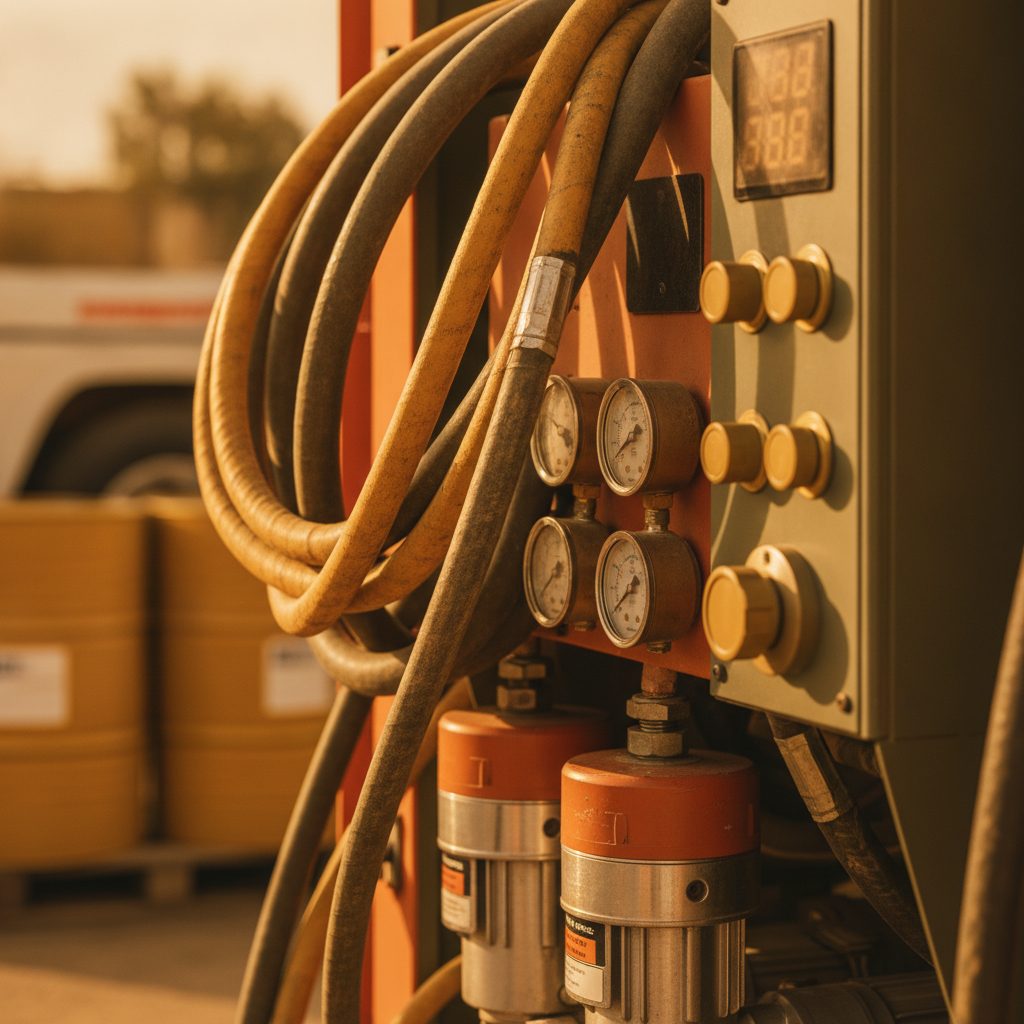
The proportioner is the single most expensive and most consequential piece of equipment on a spray foam rig — it's the machine that pumps, heats, and mixes the two chemical components at the correct ratio. Every off-ratio failure this industry deals with traces back to this piece of equipment, which is exactly why buying the right one matters more than any other equipment decision.
What Actually Separates Proportioner Price Tiers
Entry-level proportioners handle lower output rates and simpler ratio-control systems, adequate for smaller residential jobs but limiting for larger commercial work where a crew needs to lay down significant volume in a workday. Mid-tier and high-output proportioners add higher pumping capacity, more sophisticated electronic ratio monitoring, and generally more robust heating systems for the hoses — the part of the machine most exposed to cold-weather ratio drift.
The price difference between tiers isn't marketing markup — it reflects real differences in pump durability, heating system sophistication, and how tightly the machine holds ratio across a full workday of varying ambient conditions.
Electronic Ratio Monitoring Is Worth Understanding Before You Buy
Older or more basic proportioners rely on the operator watching gauges and reacting to drift manually. Newer machines increasingly include electronic ratio monitoring that actively tracks and corrects pressure/temperature imbalance in real time, reducing dependence on operator attentiveness alone. For a new business relying on less-experienced crew early on, that electronic monitoring genuinely reduces the risk of the off-ratio failures that create expensive callbacks and reputation damage — it's a real safety margin, not just a convenience feature.
Output Rate and Matching the Machine to Your Job Mix
Proportioners are rated by output (commonly measured in pounds per minute). Buying more output capacity than your typical job actually needs adds cost without adding value — a machine sized for large commercial roof decks is overkill and harder to control precisely on small residential attic jobs. Buying too little output capacity for the commercial work you're targeting means longer job times and thinner margins on larger contracts. Matching proportioner output to your actual, realistic job mix — not your aspirational job mix — is one of the most common and most costly mistakes new operators make.
Serviceability and Parts Availability Matter as Much as the Spec Sheet
A proportioner that goes down mid-job with no parts available regionally, or with a service network that requires shipping the whole unit out for weeks, costs you real income every day it's down. Before buying, it's worth confirming what regional service and parts support actually exists for that specific brand and model in your area — a slightly more expensive machine with strong local service support is often the better business decision than the cheapest machine with none.
Key Takeaways
- Price tier differences reflect real differences in pump durability, heating sophistication, and ratio-holding accuracy, not just brand markup.
- Electronic ratio monitoring reduces dependence on operator attentiveness alone — a real risk-reduction feature, especially for newer crews.
- Match output rate (lbs/min) to your realistic job mix, not your aspirational job mix — both over- and under-buying capacity are common, costly mistakes.
- Regional parts and service availability for a specific brand/model can matter as much as the spec sheet — downtime costs real income.
Common Questions
Proportioner Buying Guide FAQs
Real questions people ask before buying equipment or starting out.
Related Topics
Choosing a Spray Foam Rig: Trailer vs. Truck-Mount
The real tradeoffs between a trailer rig and a truck-mounted rig — mobility, cost, maintenance access, and resale — for a new or growing spray foam operation.
Read moreWhat It Actually Costs to Start a Spray Foam Business
A realistic, itemized look at rig cost, chemical costs, PPE, training, and working capital — the numbers most "how to start" content skips.
Read moreSpray Foam Chemical Suppliers: What to Know Before You Buy
How the major manufacturer/distributor landscape actually works — direct vs. distributor purchasing, minimum orders, and what changes as you scale.
Read more
Ready to Talk Through Your Plans?
Whether you're just exploring or ready to buy a rig, talk to Contractors Choice Agency — free, no obligation, and grounded in real contractor experience.